
Sleep Unit
Diagnosis of sleep disorders in Neurotoc
At Neurotoc, we understand sleep as an essential pillar of brain and overall health.
Sleeping well not only improves memory, concentration, and mood, but can also help prevent neurodegenerative diseases.
Therefore, we offer a specialized approach to the diagnosis of sleep disorders, using cutting-edge technology and clinical studies adapted and personalized to each patient.
With a personalized approach and advanced technology, at Neurotoc we work to ensure that sleep studies truly contribute to improving our patients’ quality of life. To this end, we offer specialized consultations to treat and assess sleep disorders, as well as specific studies to understand how you sleep and detect any potential issues that may be affecting your rest and health.
The trusted partner to ensure accurate and evidence-based diagnoses.
When is it necessary to have a sleep study?
A sleep disorder can seriously affect your quality of life. If you experience symptoms such as:
…it is important to have a specialized evaluation. At Neurotoc, we conduct medical consultations and sleep tests to detect disorders and guide a personalized treatment plan.
Diagnostic tests for sleep disorders
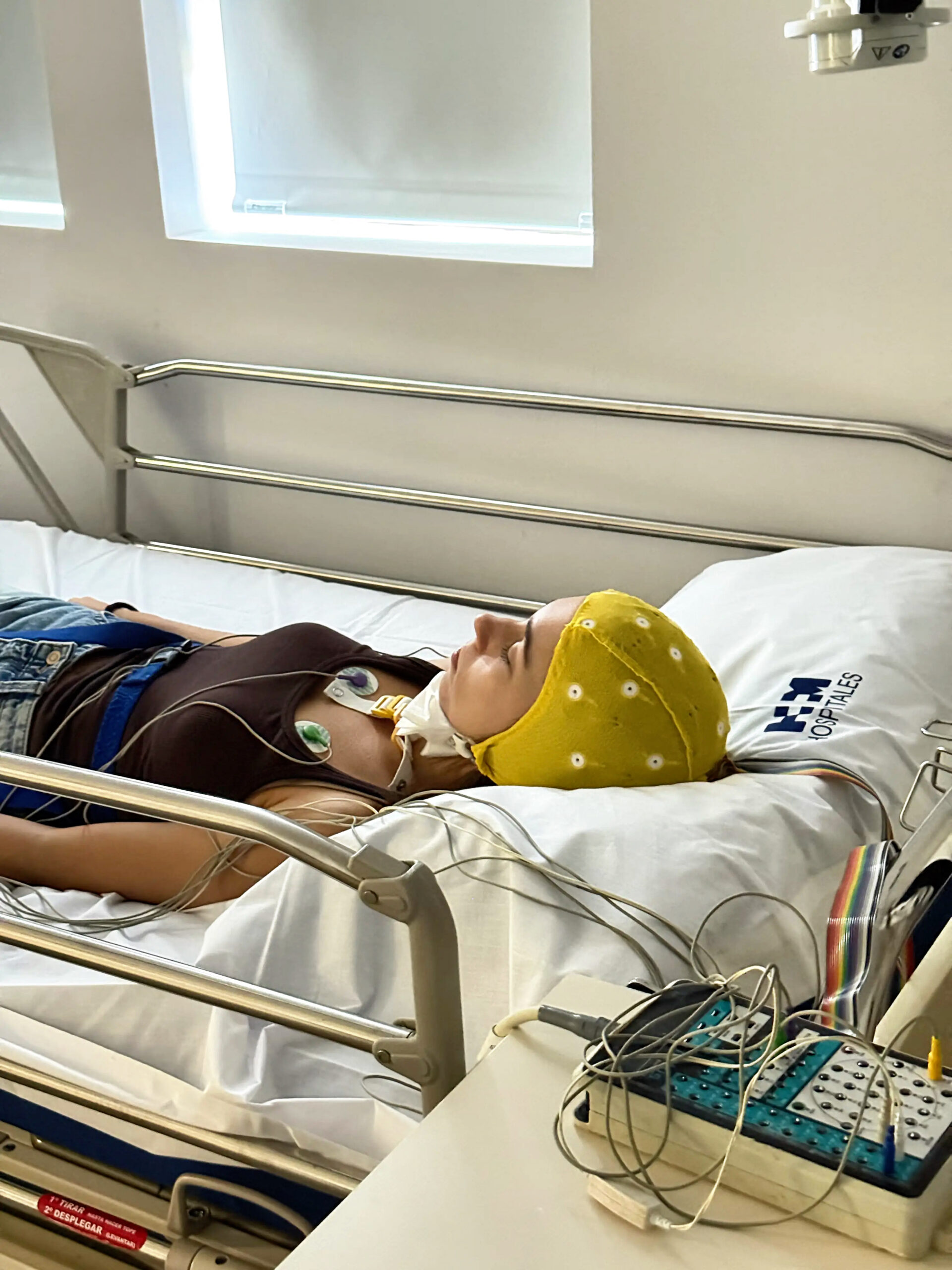
Nocturnal polysomnography
A comprehensive sleep study that analyzes how your body functions during rest.
More information
It is performed overnight, while you sleep, and allows us to record various bodily functions such as:
• Brain activity
• Breathing
• Heart rate
• Eye and muscle movement
• Blood oxygen level
With this test, we can detect disorders such as sleep apnea, insomnia, restless legs syndrome, or parasomnias (such as sleepwalking).
Home polysomnography
Home polysomnography is a diagnostic test performed at home to study sleep and detect disorders such as sleep apnea, insomnia, restless legs syndrome, among others.
More information
It’s worn like a watch on the wrist and comes with a small sensor on the finger and an adhesive patch on the chest. During the night, the device records key data such as:
Sleep patterns (how much and how well you sleep)
Blood oxygen levels
Respiratory movements
Heart rate
The presence of snoring or apnea
CPAP Titration
It is a test performed on patients with sleep apnea; it is carried out in hospitals and at home.
More information
The process of adjusting the air pressure delivered by a CPAP machine during sleep is used to find the optimal pressure that eliminates apneas and other sleep-related breathing events.
Different masks are also tested to improve the tolerability of CPAP therapy.
Actigraphy
It is a home study that helps us measure and analyze circadian rhythms.
More information
The device measures:
Skin temperature.
Physical activity, light exposure, and sleep patterns.
This helps us understand the patient’s biological rhythms to adjust their rest and performance and diagnose circadian rhythm disorders.
Multiple Sleep Latency Test (MSLT)
It is a test to diagnose narcolepsy and other problems related to excessive daytime sleepiness.
More information
It is performed during the day, usually after a polysomnography the night before. It involves taking several short naps throughout the day to measure how long it takes you to fall asleep and the quality of your sleep.
Home Respiratory Polygraphy
This is a simpler study that you can do at home. Sensors are placed on your body to record your breathing, oxygen levels, and heart rate while you sleep.
It is especially useful for detecting cases of sleep apnea, particularly if there are no other complex neurological symptoms.